MAUHAN
A portfolio site that takes the meeting
Industry
Personal Brand, Tech Leadership
Stage
Individual / Executive
Services
UX Strategy • Concept Design • UI & Interaction Design • Frontend Development in Partnership with Dev Agency Piramid
Context
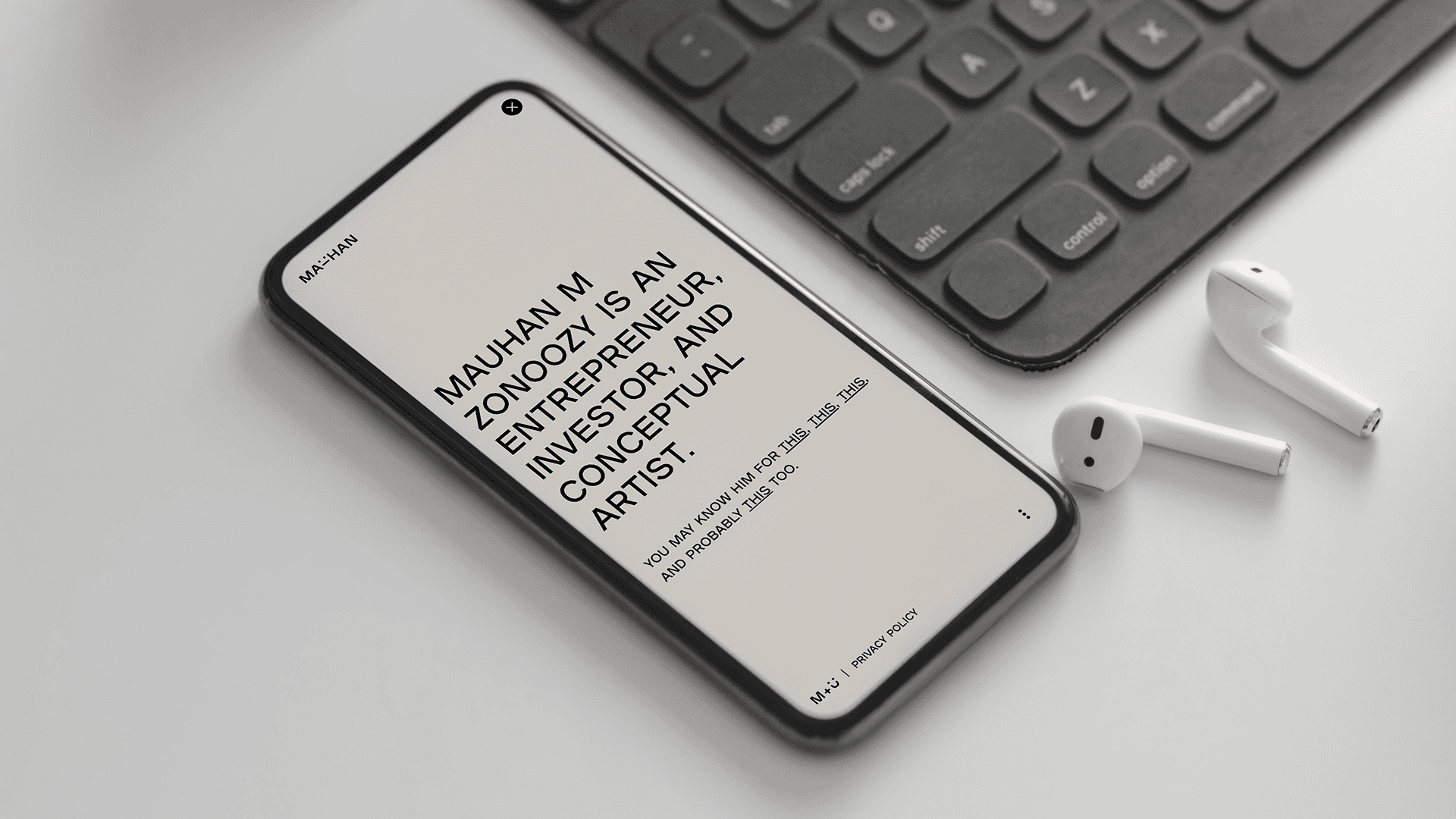
Mauhan Zonoozy is a tech executive whose previous role was Global Head of Innovation at Spotify. He came to Vicine looking for a personal site that would do something a CV-style portfolio could not: hold a stranger's attention long enough to feel like a real introduction. The brief was loose on format and specific on intent. He wanted a site that challenged people, surprised them, and in a way encapsulated his orthogonal way of thinking.
The work
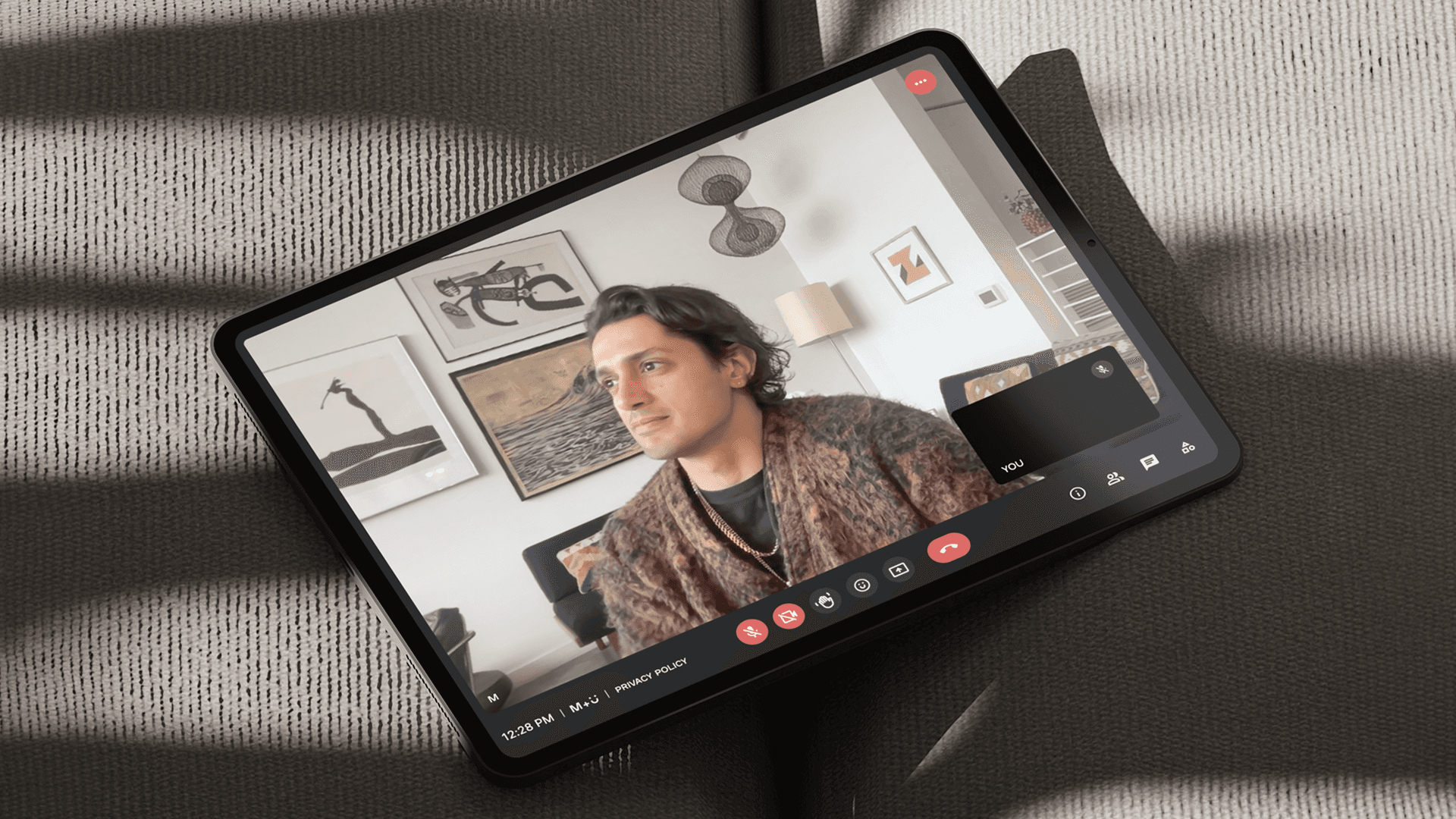
After months of ideation, backs and forths and sketching possible ideas, we came up with the idea of building the site as a simulated one-on-one Google Meet. When a visitor lands on mauhan.com, the page asks for webcam permission. In exchange, it drops them into what looks and behaves like an active video call: Mauhan on one side of the frame, in a pre-recorded clip from his living room, and the visitor's own webcam feed on the other. The interface carries the full vocabulary of the platform it borrows from: chat, custom emoji reactions, the hang-up button, the blinking record dot. Visitors can leave the call. Most do not, at least not right away.
Outcome and results
The site launched in late 2023 and went viral within hours. It cleared a million Instagram impressions in a single afternoon, helped along by figures including Lil Yachty and 100 Gecs sharing screengrabs of themselves apparently mid-call with Mauhan. Mauhan reported a sharp rise in inbound business enquiries and panel invitations following the launch.
Move from portfolio to encounter
The Challenge
The default form for an executive at this level is a tidy online CV: a roles list, a few photos, a contact button. The format works for filtering but it asks nothing of the person reading it. Mauhan's request was for something that did not act like a CV. He wanted visitors to leave with a sense of who he was, rather than a list of where he had been. That meant the structural decision came before any visual one. The format itself had to earn attention rather than wait for it.
What we did
We treated the site as a single interaction rather than a collection of pages. Instead of designing sections to navigate, we designed an encounter to enter. The call concept carried two arguments at once. It made Mauhan feel present and available, in a way a static photograph cannot, and it shifted the visitor from passive reader to active participant, giving the site the same weight as a real introduction. Once the format was settled, the rest of the work became a question of fidelity to the conceit rather than navigation or hierarchy.
OUR PROCESS
Stakeholder interviews to understand intent behind the brief
Kickoff workshops to map what a real introduction actually requires
Brand narrative work to define what Mauhan wanted visitors to feel, not just know
UX strategy to choose format before touching any visual decision
OUR TOOLS
Stakeholder Interviews
Kickoff Workshops
Define Success Criteria
Brand positioning
Brand Narrative
UX Strategy
Visual Territories
Art Direction
Make participation structural
The Challenge
The internet has trained people to consume passively. A visitor scrolls a personal site the same way they scroll anything else: half-attentive, ready to leave. The conceptual challenge was to find a format where leaving felt like leaving a conversation, not closing a tab. Without that shift, the site would be another passive watch, however well crafted.
What we did
The webcam permission prompt is doing more work than it appears to. Granting access to your own camera is the opt-in moment, the small conscious decision that flips a visitor from spectator to participant. Once a visitor is in a one-on-one call, even one they later realise is pre-recorded, they cannot easily fall back into passivity. The interaction model borrows the social contract of a real video call and applies it to a piece of personal branding. The blinking red indicator, the chat bar, the muted control set: all of it reinforces the sense that you are in a conversation rather than reading a page.
The strategic point we held throughout was simple. Audiences are conditioned to watch other people, far less to participate with them. Building the participation moment into the front door of the site was the difference between a project people remembered and a project people screen-recorded.
OUR PROCESS
User journey mapping to find where passivity kicks in on personal sites
Interaction design built around the webcam permission as the opt-in moment
Rapid prototyping to test whether the social contract of a call held up
Motion and animation to reinforce the sense of being in a conversation
OUR TOOLS
UX Design
User Journeys
Interaction Design
Wireframing
Rapid Prototyping
Motion & Animations
Get the believability right
The Challenge
A pastiche of a video call is a gag. A faithful one is an experience. The whole concept rested on whether the UI behaved closely enough to a real Google Meet that a visitor's body would respond before their head caught up: the small alertness of being on camera, the muscle memory of looking for the mute button, the pause before hanging up. Anywhere the interface broke that illusion, the conceit collapsed into novelty. The craft bar was high and largely invisible. Most of the work would only be noticed if it failed.
What we did
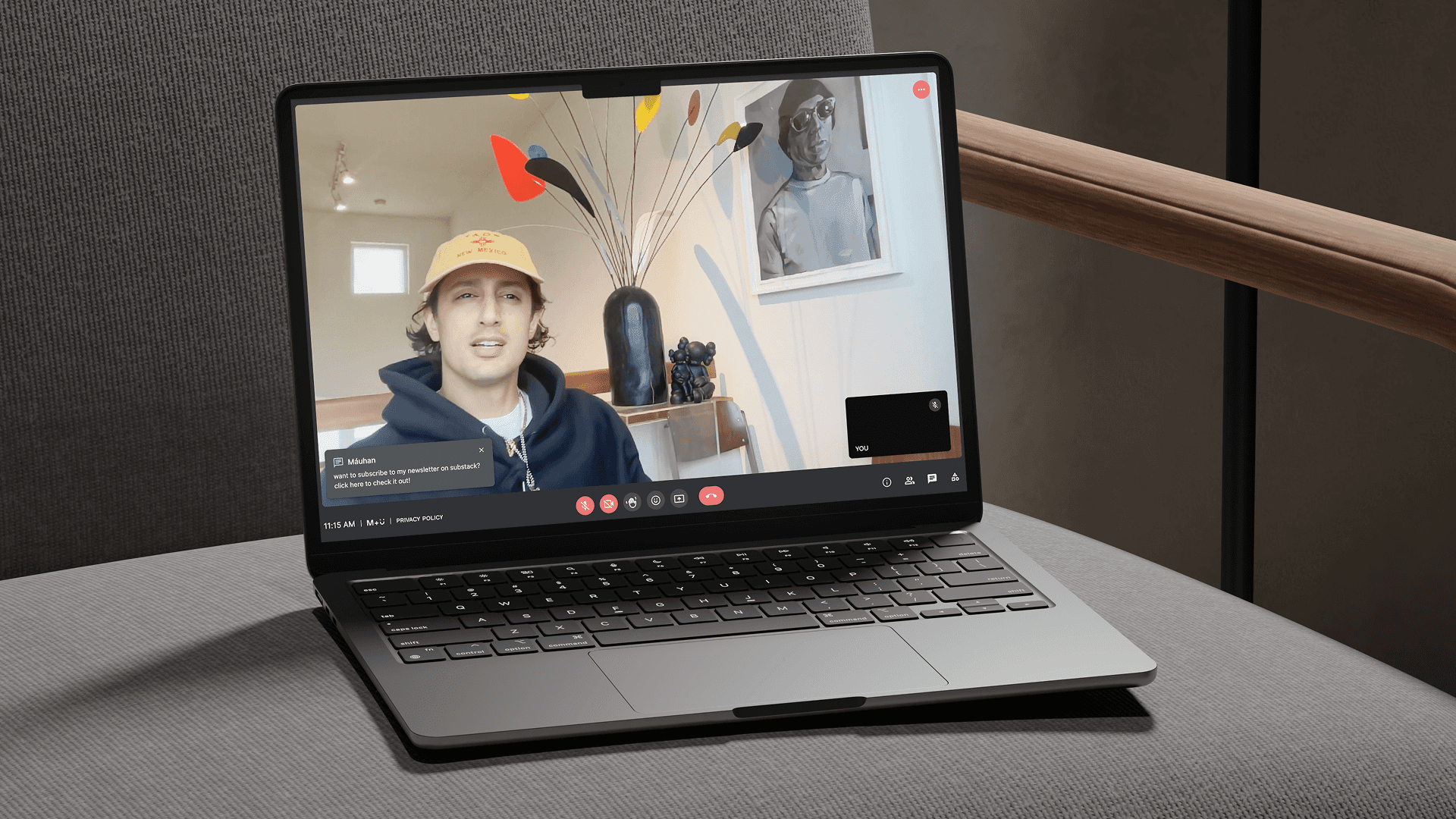
We rebuilt the call vocabulary in detail. The chat bar accepts and displays input the way a real client would. The emoji reactions fire off and trail across the screen with the right physics. The hang-up button does what hang-up buttons do. The recording indicator blinks at the cadence visitors expect, and Mauhan's own framing in the recorded video matches the camera placement, lighting, and posture of someone genuinely on a call from his living room rather than performing for a portfolio. We built the frontend so each of these elements behaves against expectation, not just looks like it.
OUR PROCESS
UI design rebuilt around the full vocabulary of a real Google Meet interface.
Interaction design so each element behaves correctly, not just looks correct
Art direction of Mauhan's recorded video to match real call framing and lighting
Frontend development in partnership with Piramid to make the illusion hold at every detail
OUR TOOLS
UI Design
Interaction Design
Motion & Animations
Art Direction
Video And Motion
Frontend Development
Copywriting
Conclusion
The site cleared a million Instagram impressions within a few hours of launch, driven in part by visitors screen-grabbing themselves apparently on a call with Mauhan and reposting the result. Lil Yachty and 100 Gecs were among the public figures who shared their own captures, which carried the project well beyond the audience an executive portfolio would normally reach. Mauhan reported a noticeable rise in inbound business enquiries and panel invitations following the launch.
The structural outcome matters as much as the impressions number. The site gave Mauhan a piece of personal infrastructure that does the work of a first meeting before a first meeting happens, which is a different deliverable from a portfolio. Visitors leave with a sense of him. That is what he asked for.
Hungry for more insights?
Subscribe to our to stay up to date with industry standards.
Let’s talk
Ready to build something remarkable? We partner with ambitious teams who are serious about growth.
Contact Us
© 2026 Vicine
MAUHAN
A portfolio site that takes the meeting
INDUSTRY
Personal Brand, Tech Leadership
STAGE
Individual / Executive
SERVICES
UX Strategy • Concept Design • UI & Interaction Design • Frontend Development in Partnership with Dev Agency Piramid
OBJECTIVES
Mauhan Zonoozy is a tech executive whose previous role was Global Head of Innovation at Spotify. He came to Vicine looking for a personal site that would do something a CV-style portfolio could not: hold a stranger's attention long enough to feel like a real introduction. The brief was loose on format and specific on intent. He wanted a site that challenged people, surprised them, and in a way encapsulated his orthogonal way of thinking.
OBJECTIVES
After months of ideation, backs and forths and sketching possible ideas, we came up with the idea of building the site as a simulated one-on-one Google Meet. When a visitor lands on mauhan.com, the page asks for webcam permission. In exchange, it drops them into what looks and behaves like an active video call: Mauhan on one side of the frame, in a pre-recorded clip from his living room, and the visitor's own webcam feed on the other. The interface carries the full vocabulary of the platform it borrows from: chat, custom emoji reactions, the hang-up button, the blinking record dot. Visitors can leave the call. Most do not, at least not right away.
OBJECTIVES
The site launched in late 2023 and went viral within hours. It cleared a million Instagram impressions in a single afternoon, helped along by figures including Lil Yachty and 100 Gecs sharing screengrabs of themselves apparently mid-call with Mauhan. Mauhan reported a sharp rise in inbound business enquiries and panel invitations following the launch.
Move from portfolio to encounter
The Challenge
The default form for an executive at this level is a tidy online CV: a roles list, a few photos, a contact button. The format works for filtering but it asks nothing of the person reading it. Mauhan's request was for something that did not act like a CV. He wanted visitors to leave with a sense of who he was, rather than a list of where he had been. That meant the structural decision came before any visual one. The format itself had to earn attention rather than wait for it.
What we did
We treated the site as a single interaction rather than a collection of pages. Instead of designing sections to navigate, we designed an encounter to enter. The call concept carried two arguments at once. It made Mauhan feel present and available, in a way a static photograph cannot, and it shifted the visitor from passive reader to active participant, giving the site the same weight as a real introduction. Once the format was settled, the rest of the work became a question of fidelity to the conceit rather than navigation or hierarchy.
OUR PROCESS
Stakeholder interviews to understand intent behind the brief
Kickoff workshops to map what a real introduction actually requires
Brand narrative work to define what Mauhan wanted visitors to feel, not just know
UX strategy to choose format before touching any visual decision
OUR TOOLS
Stakeholder Interviews
Kickoff Workshops
Define Success Criteria
Brand positioning
Brand Narrative
UX Strategy
Visual Territories
Art Direction
Make participation structural
The Challenge
The internet has trained people to consume passively. A visitor scrolls a personal site the same way they scroll anything else: half-attentive, ready to leave. The conceptual challenge was to find a format where leaving felt like leaving a conversation, not closing a tab. Without that shift, the site would be another passive watch, however well crafted.
What we did
The webcam permission prompt is doing more work than it appears to. Granting access to your own camera is the opt-in moment, the small conscious decision that flips a visitor from spectator to participant. Once a visitor is in a one-on-one call, even one they later realise is pre-recorded, they cannot easily fall back into passivity. The interaction model borrows the social contract of a real video call and applies it to a piece of personal branding. The blinking red indicator, the chat bar, the muted control set: all of it reinforces the sense that you are in a conversation rather than reading a page.
The strategic point we held throughout was simple. Audiences are conditioned to watch other people, far less to participate with them. Building the participation moment into the front door of the site was the difference between a project people remembered and a project people screen-recorded.
OUR PROCESS
User journey mapping to find where passivity kicks in on personal sites
Interaction design built around the webcam permission as the opt-in moment
Rapid prototyping to test whether the social contract of a call held up
Motion and animation to reinforce the sense of being in a conversation
OUR TOOLS
UX Design
User Journeys
Interaction Design
Wireframing
Rapid Prototyping
Motion & Animations
Get the believability right
The Challenge
A pastiche of a video call is a gag. A faithful one is an experience. The whole concept rested on whether the UI behaved closely enough to a real Google Meet that a visitor's body would respond before their head caught up: the small alertness of being on camera, the muscle memory of looking for the mute button, the pause before hanging up. Anywhere the interface broke that illusion, the conceit collapsed into novelty. The craft bar was high and largely invisible. Most of the work would only be noticed if it failed.
What we did
We rebuilt the call vocabulary in detail. The chat bar accepts and displays input the way a real client would. The emoji reactions fire off and trail across the screen with the right physics. The hang-up button does what hang-up buttons do. The recording indicator blinks at the cadence visitors expect, and Mauhan's own framing in the recorded video matches the camera placement, lighting, and posture of someone genuinely on a call from his living room rather than performing for a portfolio. We built the frontend so each of these elements behaves against expectation, not just looks like it.
OUR PROCESS
UI design rebuilt around the full vocabulary of a real Google Meet interface.
Interaction design so each element behaves correctly, not just looks correct
Art direction of Mauhan's recorded video to match real call framing and lighting
Frontend development in partnership with Piramid to make the illusion hold at every detail
OUR TOOLS
UI Design
Interaction Design
Motion & Animations
Art Direction
Video And Motion
Frontend Development
Copywriting
CONCLUSION
The site cleared a million Instagram impressions within a few hours of launch, driven in part by visitors screen-grabbing themselves apparently on a call with Mauhan and reposting the result. Lil Yachty and 100 Gecs were among the public figures who shared their own captures, which carried the project well beyond the audience an executive portfolio would normally reach. Mauhan reported a noticeable rise in inbound business enquiries and panel invitations following the launch.
The structural outcome matters as much as the impressions number. The site gave Mauhan a piece of personal infrastructure that does the work of a first meeting before a first meeting happens, which is a different deliverable from a portfolio. Visitors leave with a sense of him. That is what he asked for.
Hungry for more insights?
Subscribe to our to stay up to date with industry standards.
Let’s talk
Ready to build something remarkable? We partner with ambitious teams who are serious about growth.
Contact Us
© 2026 Vicine
MAUHAN
A portfolio site that takes the meeting
Industry
Personal Brand, Tech Leadership
Stage
Individual / Executive
Services
UX Strategy • Concept Design • UI & Interaction Design • Frontend Development in Partnership with Dev Agency Piramid
Context
Mauhan Zonoozy is a tech executive whose previous role was Global Head of Innovation at Spotify. He came to Vicine looking for a personal site that would do something a CV-style portfolio could not: hold a stranger's attention long enough to feel like a real introduction. The brief was loose on format and specific on intent. He wanted a site that challenged people, surprised them, and in a way encapsulated his orthogonal way of thinking.
The work
After months of ideation, backs and forths and sketching possible ideas, we came up with the idea of building the site as a simulated one-on-one Google Meet. When a visitor lands on mauhan.com, the page asks for webcam permission. In exchange, it drops them into what looks and behaves like an active video call: Mauhan on one side of the frame, in a pre-recorded clip from his living room, and the visitor's own webcam feed on the other. The interface carries the full vocabulary of the platform it borrows from: chat, custom emoji reactions, the hang-up button, the blinking record dot. Visitors can leave the call. Most do not, at least not right away.
Outcome and results
The site launched in late 2023 and went viral within hours. It cleared a million Instagram impressions in a single afternoon, helped along by figures including Lil Yachty and 100 Gecs sharing screengrabs of themselves apparently mid-call with Mauhan. Mauhan reported a sharp rise in inbound business enquiries and panel invitations following the launch.
Move from portfolio to encounter
The Challenge
The default form for an executive at this level is a tidy online CV: a roles list, a few photos, a contact button. The format works for filtering but it asks nothing of the person reading it. Mauhan's request was for something that did not act like a CV. He wanted visitors to leave with a sense of who he was, rather than a list of where he had been. That meant the structural decision came before any visual one. The format itself had to earn attention rather than wait for it.
What we did
We treated the site as a single interaction rather than a collection of pages. Instead of designing sections to navigate, we designed an encounter to enter. The call concept carried two arguments at once. It made Mauhan feel present and available, in a way a static photograph cannot, and it shifted the visitor from passive reader to active participant, giving the site the same weight as a real introduction. Once the format was settled, the rest of the work became a question of fidelity to the conceit rather than navigation or hierarchy.
OUR PROCESS
Stakeholder interviews to understand intent behind the brief
Kickoff workshops to map what a real introduction actually requires
Brand narrative work to define what Mauhan wanted visitors to feel, not just know
UX strategy to choose format before touching any visual decision
OUR TOOLS
Stakeholder Interviews
Kickoff Workshops
Define Success Criteria
Brand positioning
Brand Narrative
UX Strategy
Visual Territories
Art Direction
Make participation structural
The Challenge
The internet has trained people to consume passively. A visitor scrolls a personal site the same way they scroll anything else: half-attentive, ready to leave. The conceptual challenge was to find a format where leaving felt like leaving a conversation, not closing a tab. Without that shift, the site would be another passive watch, however well crafted.
What we did
The webcam permission prompt is doing more work than it appears to. Granting access to your own camera is the opt-in moment, the small conscious decision that flips a visitor from spectator to participant. Once a visitor is in a one-on-one call, even one they later realise is pre-recorded, they cannot easily fall back into passivity. The interaction model borrows the social contract of a real video call and applies it to a piece of personal branding. The blinking red indicator, the chat bar, the muted control set: all of it reinforces the sense that you are in a conversation rather than reading a page.
The strategic point we held throughout was simple. Audiences are conditioned to watch other people, far less to participate with them. Building the participation moment into the front door of the site was the difference between a project people remembered and a project people screen-recorded.
OUR PROCESS
User journey mapping to find where passivity kicks in on personal sites
Interaction design built around the webcam permission as the opt-in moment
Rapid prototyping to test whether the social contract of a call held up
Motion and animation to reinforce the sense of being in a conversation
OUR TOOLS
UX Design
User Journeys
Interaction Design
Wireframing
Rapid Prototyping
Motion & Animations
Get the believability right
The Challenge
A pastiche of a video call is a gag. A faithful one is an experience. The whole concept rested on whether the UI behaved closely enough to a real Google Meet that a visitor's body would respond before their head caught up: the small alertness of being on camera, the muscle memory of looking for the mute button, the pause before hanging up. Anywhere the interface broke that illusion, the conceit collapsed into novelty. The craft bar was high and largely invisible. Most of the work would only be noticed if it failed.
What we did
We rebuilt the call vocabulary in detail. The chat bar accepts and displays input the way a real client would. The emoji reactions fire off and trail across the screen with the right physics. The hang-up button does what hang-up buttons do. The recording indicator blinks at the cadence visitors expect, and Mauhan's own framing in the recorded video matches the camera placement, lighting, and posture of someone genuinely on a call from his living room rather than performing for a portfolio. We built the frontend so each of these elements behaves against expectation, not just looks like it.
OUR PROCESS
UI design rebuilt around the full vocabulary of a real Google Meet interface.
Interaction design so each element behaves correctly, not just looks correct
Art direction of Mauhan's recorded video to match real call framing and lighting
Frontend development in partnership with Piramid to make the illusion hold at every detail
OUR TOOLS
UI Design
Interaction Design
Motion & Animations
Art Direction
Video And Motion
Frontend Development
Copywriting
Conclusion
The site cleared a million Instagram impressions within a few hours of launch, driven in part by visitors screen-grabbing themselves apparently on a call with Mauhan and reposting the result. Lil Yachty and 100 Gecs were among the public figures who shared their own captures, which carried the project well beyond the audience an executive portfolio would normally reach. Mauhan reported a noticeable rise in inbound business enquiries and panel invitations following the launch.
The structural outcome matters as much as the impressions number. The site gave Mauhan a piece of personal infrastructure that does the work of a first meeting before a first meeting happens, which is a different deliverable from a portfolio. Visitors leave with a sense of him. That is what he asked for.
Hungry for more insights?
Subscribe to our to stay up to date with industry standards.
Let’s talk
Ready to build something remarkable? We partner with ambitious teams who are serious about growth.
Contact Us
© 2026 Vicine